


Hi all, I’m in Bolzano this week at the Ski Climate Conference, hosted by Atomic. It’s been a great few days listening and learning from folks around the ski industry working on climate, sustainability, and circularity. Will definitely have a bit more on that in the coming weeks.
This week I’m highlighting a UK-based company working in conservation; I know many of you are in the North America, but I want to be sure I occasionally bring a more global perspectives to issues affecting the outdoors, travel, and conservation (especially being based in London). Thanks for reading.
Kyle
A few weeks ago, I spoke with Abbey Dudas, marketing manager at Oxygen Conservation, a UK-based company that’s trying to prove something that sounds almost oxymoronic: that conservation can be profitable.
Oxygen bought its first estate in 2021, and four years later, they’ve acquired 14 estates totaling 50,000 acres across the UK. They made headlines when they sold carbon credits at £125 per ton, a world record that’s roughly 5x the market average.
But the question hanging over the entire operation isn’t whether they can command premium prices for carbon credits. It’s whether the model itself (venture capital meets conservation) can survive contact with the messy realities of making land pay for itself.
Three Models, Different Trade-offs
There are a couple of different ways that (roughly) similar approaches are is in action today.
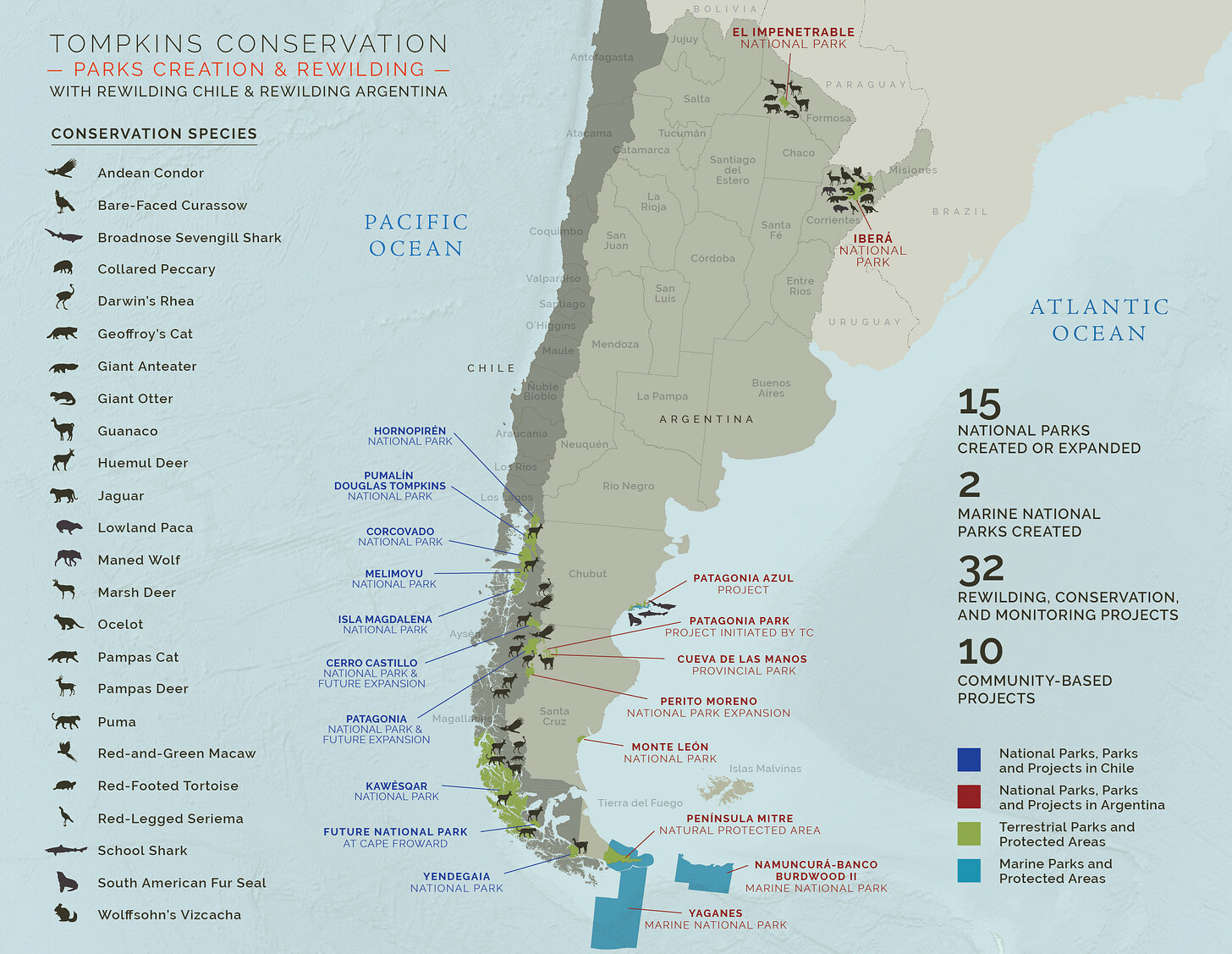
The Tompkins Conservation Model: Buy it, restore it, donate it to the public.
When Doug and Kris Tompkins wanted to preserve Patagonian wilderness in the 1990s, they spent millions buying land in Chile and Argentina. The approach was straightforward: use their wealth to acquire land, restore ecosystems, then transfer it to the state as public land. Tompkins Conservation has donated over 2 million acres and helped create or expand 16 national parks. It’s a fully philanthropic approach with no goal of financial return. Kris Tompkins called it “capitalist jujitsu” in her 2020 TED Talk.
The Ted Turner Model: Individual-driven ownership. Buy it, work it, protect it.
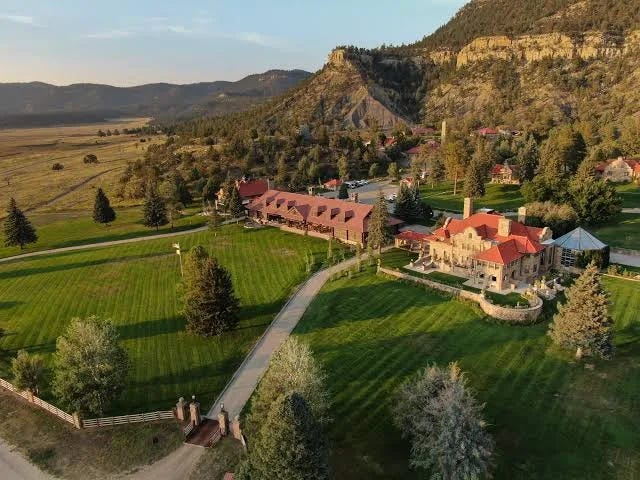
Ted Turner owns 2 million acres across 15 ranches in the American West. The model combines conservation, hunting and fishing, and luxury ecotourism. Turner placed one of the largest conservation easements in U.S. history on his flagship Flying D ranch, permanently protecting it from development. But, the land is private. If you want to see it, you need to book a stay at a Turner Reserve property, where a single night can run you upwards of $1300.
The Oxygen Model: VC-backed ownership. Buy it, restore it, and then…profit?
Oxygen is backed by private investors who want to have a positive impact on the environment. They’re working toward what amounts to a proof of concept: that you can restore degraded ecosystems, generate carbon credits, run ecotourism operations, develop renewables, and practice regenerative agriculture while delivering returns that justify the initial capital investment.
They’re not alone. Gresham House, already the UK’s largest forestry manager with over 165,000 acres, and others, are making similar bets on natural capital. But Oxygen’s ambitions are particularly aggressive: they’re targeting 5x growth over the next five years, that’s 250,000 acres. It would make them one of the UK’s largest private landowners.
How Oxygen’s Model Works
Oxygen’s process starts with identifying degraded land like former shooting estates, overgrazed moors, drained peatlands, or plantations of non-native trees. As an example, beer company Brewdog originally purchased a Scottish estate in 2020, pledging to plant millions of trees as part of a brand carbon-reduction narrative. But, after sales declined in recent years, those initiatives were on the chopping block and Oxygen recently took over the Kinara Estate.
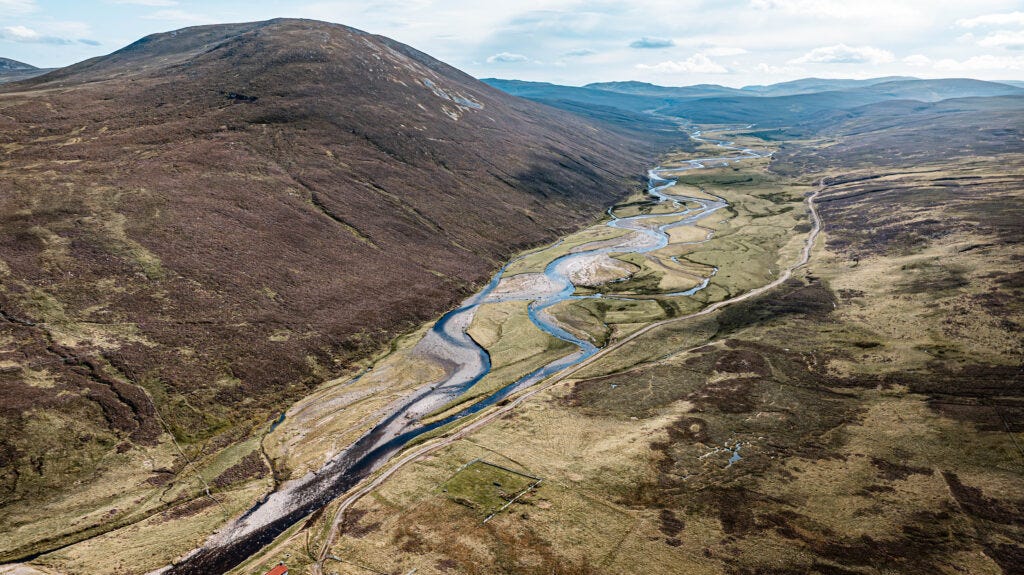
Oxygen then models the “natural capital” potential, which might include carbon sequestration, biodiversity net gain credits, and revenue from ecotourism or renewable energy projects.
The revenue model is diversified by necessity; each property will have different characteristics that lends itself to a tailored approach. Carbon credits make up a significant portion, they’ve sold credits under the Woodland Carbon Code and Peatland Code, UK government-backed standards that require rigorous verification. But, they’re also developing wind projects, running farm partnerships that practice regenerative agriculture, and operating ecotourism properties in Devon and Scotland.
The UK’s regulatory environment makes this model easier than it would be elsewhere. Both the Woodland Carbon Code and the Peatland Code have strict requirements: projects must demonstrate “additionality” (the carbon savings that wouldn’t happen otherwise) and “permanence” (commitments lasting 35-100 years for woodland, 30+ for peatland).
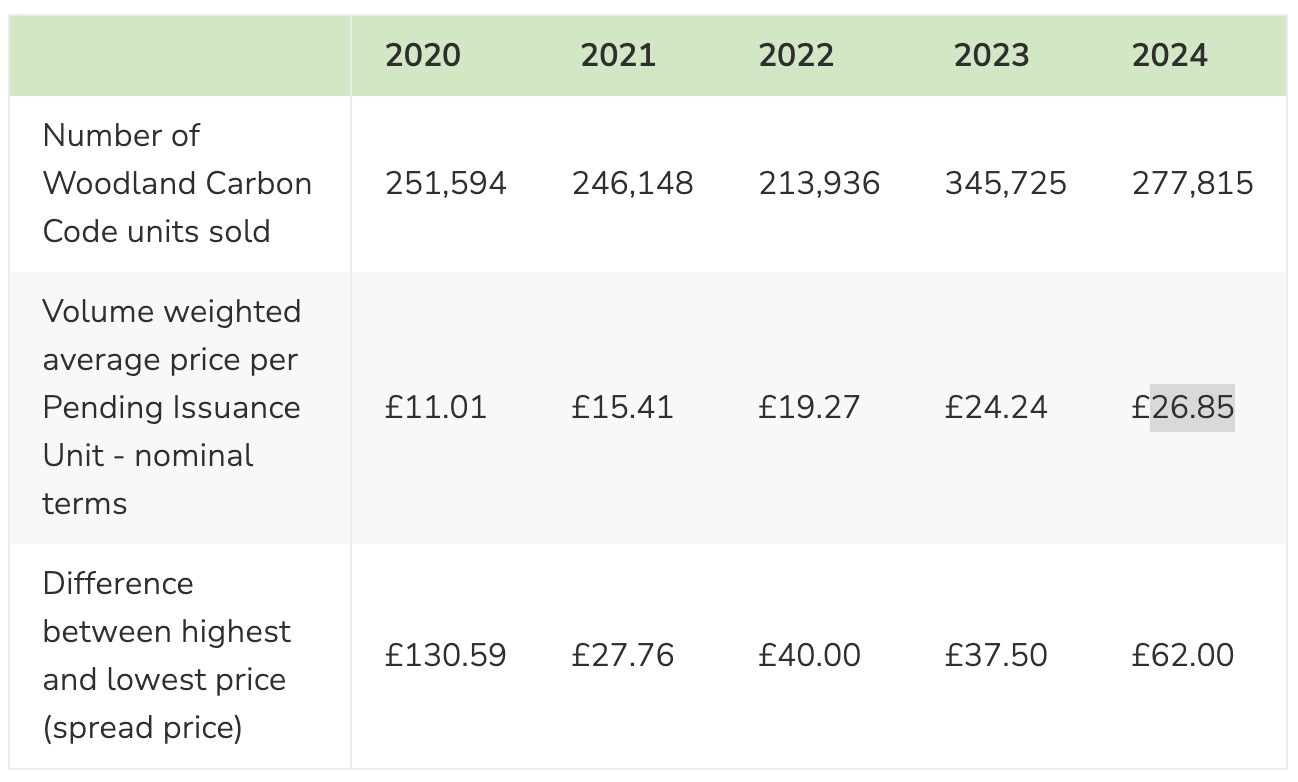
Average prices for UK carbon credits have more than doubled from £11 per ton in 2020 to £26.85 in 2024 (significantly higher than the global average of around $7 USD). Credits can’t be sold when trees are planted, only years later when they’ve actually sequestered carbon.
Oxygen’s £125/ton record came from selling what they describe as a “premium” product on their Leighton Estate: not just carbon, but verified restoration work with drone monitoring, GIS tracking, habitat creation…and a compelling story.
That premium is also likely driven because the credits can feel more “tangible.” Being located in the UK provides a sense of place, connection, and reality to buyers that is less easily replicated with an anonymous hectare of forest in South America.
Access, Conservation, and Decision-making
The Tompkins model prioritizes more universal access. Their donated lands became national parks. The Route of Parks in Chilean Patagonia now spans 1,700 miles encompassing 17 national parks.
Turner’s model restricts access but generates income through selective tourism. You can visit a Turner Reserve, but you’re paying a premium to do so. The trade-off is that limited visitation reduces impact on sensitive ecosystems while funding ongoing conservation work.
Oxygen lands somewhere in between. Access can vary; some properties remain private, others have ecotourism, and they’re also exploring partnerships with Camp Wild (similar to Hipcamp in the US) to provide wild camping access on other estates.
But fundamentally, these are private lands.
If Oxygen determines that certain areas need to be off-limits to maintain ecological value, that’s their call. If they decide to scale back public access to maximize carbon sequestration, they can do that as well.
The speed of decision-making this enables makes private conservation attractive. ”We have this ability to make decisions quickly, to do it at pace, do it at scale,” as Dudas puts it. But that cuts both ways. This is in contrast to community-based or federal/public ownership, where consensus-building can take years but also ensures that diverse stakeholders have input. That kind of engagement can lock up decision-making, but the people involved are typically the people who actually live on or near the land, whose livelihoods depend on access, and who have been there for generations.
Plans to build a wind farm in partnership with Low Carbon on Oxygen owned lands in Scotland have met with mixed community feedback, with concerns about culling a herd of feral goats (Oxygen identified as detrimental to the ecological landscapae after an 18-month review), aestheics, and other local recreation challenges. Some who work in rewilding and ecosystem restoration in the UK express a cautious pessimism about their approach, both from a funding perspective and how they approach partnerships and development. Oxygen has anticipated much of this feedback and has a ‘Criticize Us’ section on it’s website addressing some of the common issues.
The Original Question
All of this brings us back to the question we started with: Can conservation turn a profit? And, should land need to make money?
“In a perfect world, we wouldn’t have to make a profit on it,” Dudas acknowledges. “Conservation shouldn’t have to make profit. But at the moment, we live in a society where, unfortunately, it’s very profitable to destroy the planet. So we’re trying to find an alternative.”
That’s the pitch, essentially. If conservation can compete economically with extraction and development, then capital can flow to ecosystem restoration. Pension funds and institutional investors can have a viable reasoning to put money into restoration projects rather than fossil fuels.
But there’s an obvious danger here. Once you go down the VC-backed rabbit hole, you’re inevitably subject to pressures around scaling, maximizing revenue, and more – no matter whether you’re a tech startup or conservation organization.
Do they scale to hundreds of thousands of acres? Do they eventually exit by selling estates to other investors or taking the company public? The stated goal is to operate at “a landscape scale,” and eventually expanding to the US where there’s more land available. But conservation at scale requires permanence—a timescale of decades, centuries. Markets operate on quarterly reports and exit strategies, and that’s where the bulk of my skepticism about Oxygen lies. I’ve been at enough startups to know see what VC demands gan do, and know that changes in ownership often promise stability but later bring significant disruption.
This is a structural challenge that venture-backed conservation can’t easily escape. Philanthropists like the Tompkins can afford to be patient; their investment has no expectation of financial return. Turner’s model is owner-financed with no external investors demanding exits. Once you bring in institutional capital with return expectations and debt requirements, you’re inevitably forced into making different decisions even if your intentions are good.
Answers will take time
It’s far too early to have a clear answer about whether Oxygen’s model “works.”
The regulatory and carbon credit environment in the UK is more friendly to this approach than in most countries, and demand for high-quality carbon credits appears to be growing. But the voluntary carbon market is not without issues, and the history of conservation is littered with projects that looked promising until they weren’t.
The question of what we should do with land (who should own it, how it should be restored, who gets to access it, and whether it needs to generate returns) won’t be settled by any single for-profit company, NGO, or business model. We should be open to new approaches and experimentation in the conservation space; not everything is going to work. But we can be equally discerning about them. Every approach reveals what we’re willing to compromise to protect what’s left.
Thanks for this Kyle - I'm based in the UK and work in conservation so this was super interesting. I've heard a little about this before and I have to say I'm sceptical that treating nature as capital is the right way forward, and the idea of so much land being owned by so few makes me queasy, but something definitely needs to change if we're to succeed in restoring nature at a landscape scale here in the UK. Cheers!