


Before anything else, a reminder that today (October 6 at 11:59 PM ET) is the last day to submit comments on the Roadless Rule. I wrote about it for the AllTrails community (and on H&T) if you want a refresher, and you can leave your comment via regulations.gov.
~Kyle

Trump's recent executive order, "Reinvigorating America's Hunting Heritage" (EO 14429), is mostly about hunting. It opens up hunting in a couple of national monuments, pushes for more Sunday hunting, brings back lead ammo and tackle, and funds youth and veteran hunting programs. I’ll leave most of that to the hunting folks.
But it also includes a few provisions on river permits, bots, and corner crossing that read like they were added to hit a few “positive” beats for the broader outdoor crowd. Namely, weighted lotteries, fewer bots, and better access to landlocked public land. I don't disagree with too much of it, on the surface.
But, looking at it deeper it feels more like an order that lets the administration point and say “look, we did something for hunters and outdoorists, pay no attention to everything else going on” a month before the midterms.
A weighted river lottery
The order says: "the Secretary of Agriculture shall review high-demand Forest Service-administered river access lotteries, and shall initiate the reform of such lotteries to prioritize United States citizens, including prior unsuccessful applicants, and prohibit the use of automatic computer entries into the lotteries." That mostly means the Four Rivers lottery, which covers four of the most coveted multi-day trips in the country: the Middle Fork of the Salmon, the Main Salmon, the Selway, and Hells Canyon.
It doesn't say how, but prioritizing unsuccessful applicants sounds like a weighted lottery, something the river community has discussed for years. A 2022 American Whitewater survey found ~56% of boaters would be supportive of one.
There are few details in the order (like most of these recommendations, they seem to be written by someone who has only a rudimentary understanding of the issues at hand), but the easiest comparison is the Grand Canyon, which is already uses a weighted system. Applicants for private river permits gain points (up to 5) for every year that they don’t win a spot or go on a trip. Each point is basically another ticket in the hat for next year’s lottery. If you go on a trip (whether it’s your permit or not), your points drop back down. This gives people who haven’t been on the river recently slight edge on future lotteries.
Slight being the key word there. On rivers like the Middle Fork and the Selway, the gap between the number of applicants and total launches is so vast that basically everyone would have 5 points within a few years. It will shift the odds, just don’t expect to be suddenly winning permits because you haven’t been on the river in a while.
The Grand Canyon has a pretty stringent system to make points work. Everyone has to have an account, your last trip down the canyon is tracked whether it was private or commercial, the park checks it against their records before issuing a permit, and there’s a ranger checking IDs the day before you start on the river. Nothing like that exists for the Four Rivers. Rec.gov knows who applied and who holds the permit, and that’s about it. So for points to really work the way they do on the Grand, a lot of things would have to change. Not impossible by any means, but a lot of pieces that don’t exist right now.
Prioritizing citizens solves a problem that doesn’t exist
Of course, the admin couldn’t just stop with a weighted lottery. The order also says that lotteries should "prioritize United States citizens," which is just MURICA FIRST virtue signaling. It will have almost zero effect on permit outcomes and piles on bad PR for tourism-based local economies that are already hurting. International visitation has taken a beating over the last two years (I wrote about it here), and we don't need headlines like "USFS bans Canadians from rafting in the United States."
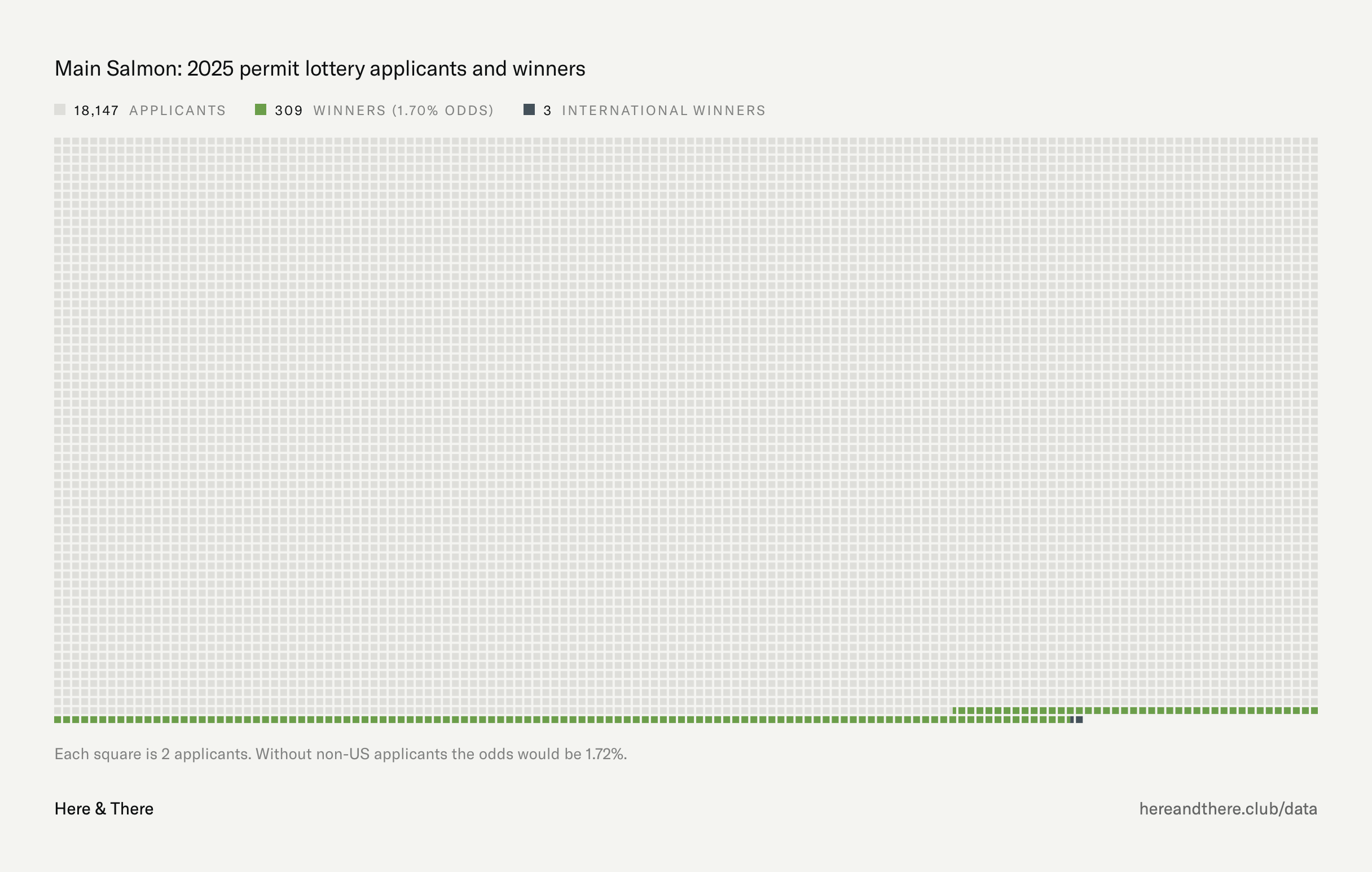
The USFS publishes official numbers on Middle Fork and Main Salmon lotteries, including addresses. This isn’t a 1:1 representation of “citizens”, but it’s pretty close and the best data we’ve got. So, I ran the numbers.
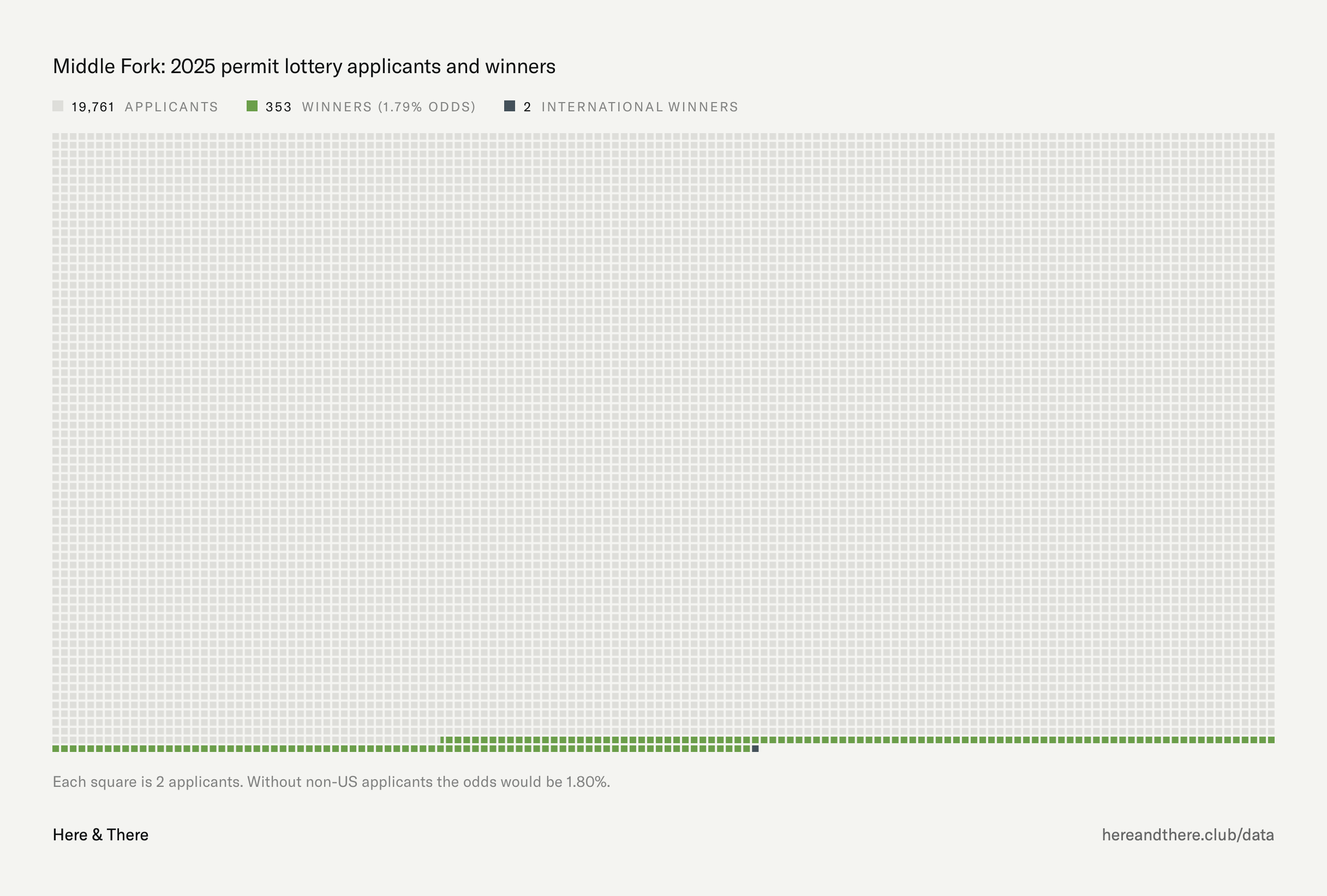
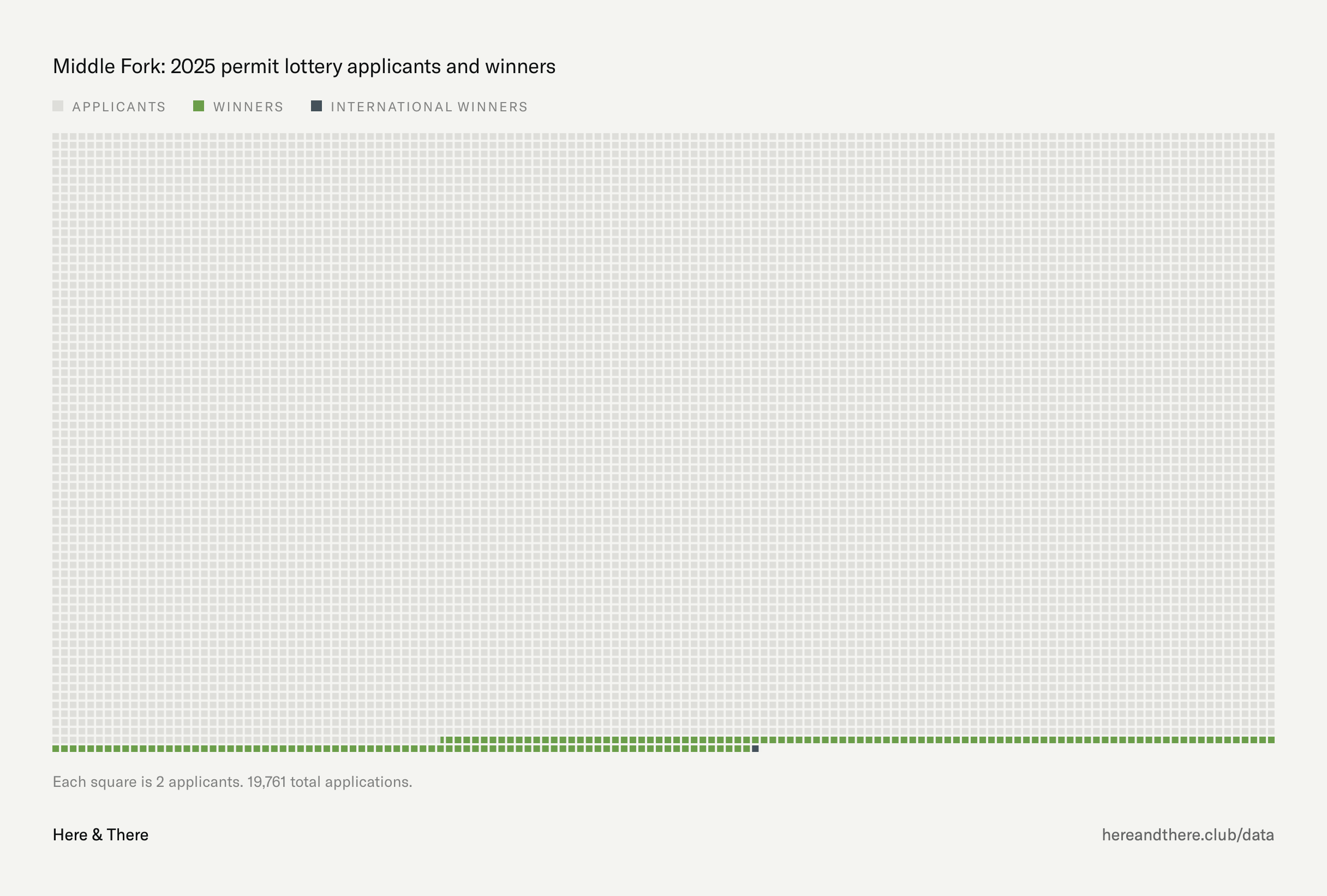
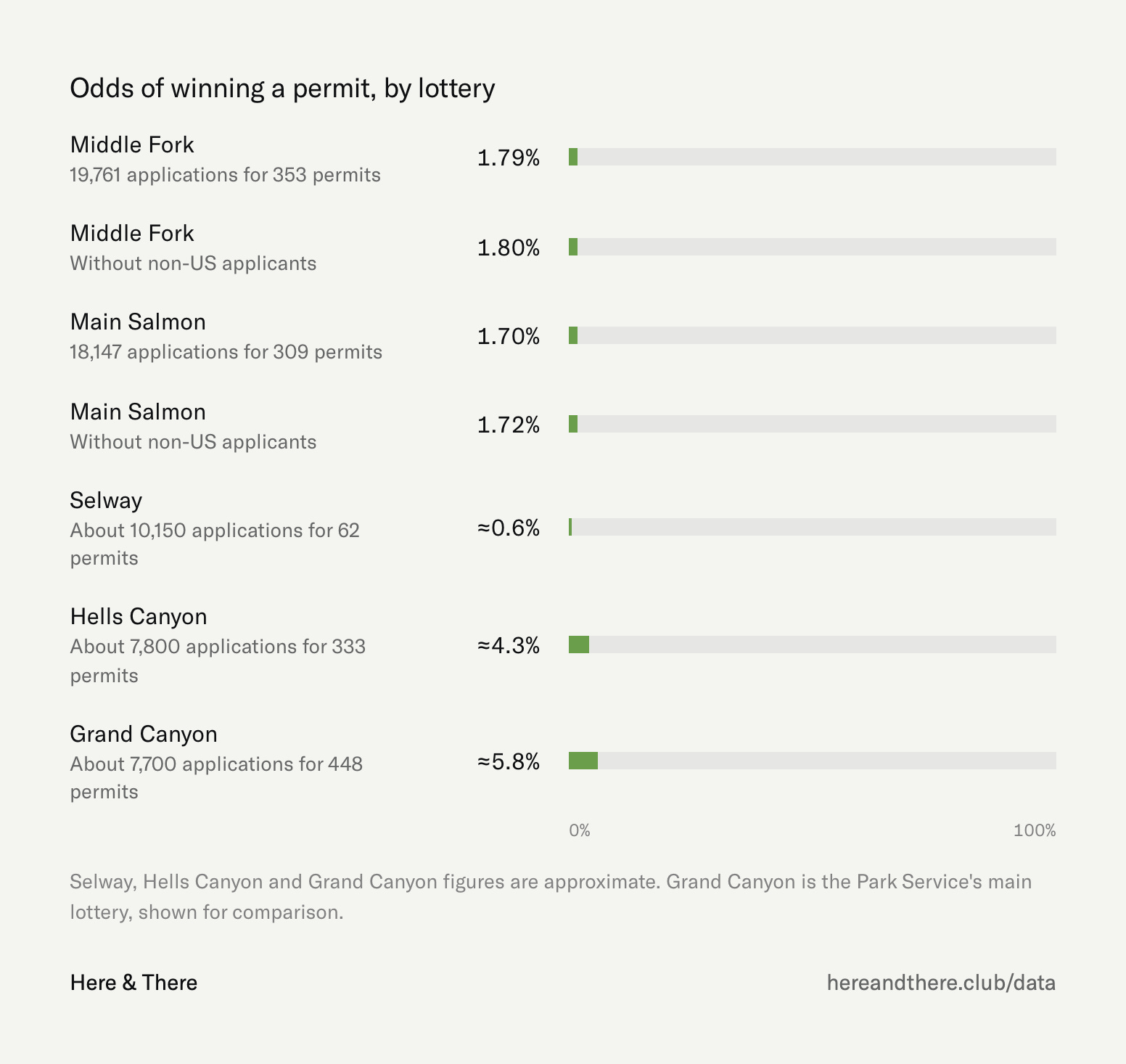
In 2025, 19,761 people applied for 353 Middle Fork permits. 176 of those were non-US addresses and TWO won, changing your lottery odds from 1.79% to a whopping 1.80%.
Honestly, I’m not even sure how this would be implemented. The Four Rivers lotteries run through Rec.gov, which does not verify citizenship, and as I mentioned above, addresses are not an accurate representation of citizenship. Not to mention, only ~50% of Americans have passports. It seems like an administrative rigamarole to exclude a fraction of a percent of people.
The bots aren’t a lottery problem
Bots (aka automatic computer entries into the lotteries) are a problem on Rec.gov, although I’d argue they’re far less of a problem than articles on the topic tend to depict. But lotteries aren’t where they’re an issue. You only get one application per person per river, and if you submit duplicates you’re banned from that river for three years. The window for lottery entries is two months so there’s no reason to be fast. And you still have to actually win to be able to book.
Where bots matter is the booking side, like campsites dropping at 10 a.m. or the release of unclaimed Middle Fork launches. That’s a completely different problem, and it’s already in the RFI for the next Rec.gov contract (I’ll bet Booz Allen knows the public (and lawmaker) perception around bots is a risk to winning the next contract).
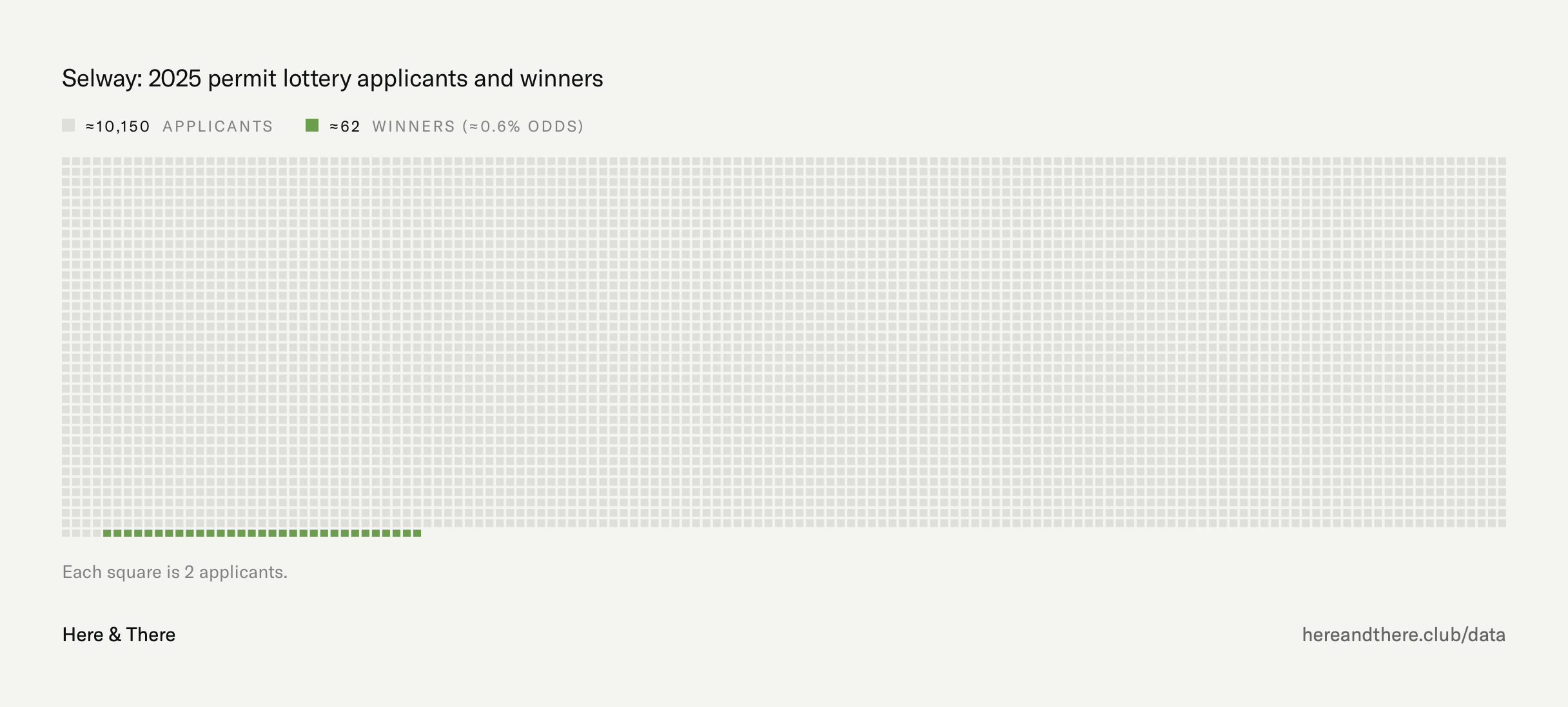
Looking at those odds gives you a good example of what’s going on across all public lands. Sure, let’s have more processes to address bots, but there are still close to 20k people applying for 350 spots. They’re gonna be nearly impossible to get, bots or not. Take the bots away, and you’ve still got tens of thousands of people fighting for a tiny number of permits and campsites during peak times of the year.
Corner crossing?
On improved land access, there's reason for cautious optimism here. The order doesn't say "corner crossing" straight out, but it directs agencies to improve access to "difficult-to-access Federal lands and waters." It's a step forward, at least on paper. Corner crossing has been a contentious public access issue for years, mostly for hunters, but it affects everyone who recreates on public lands. A lot of public land in the West is laid out like a checkerboard (thanks, 19th-century railroad grants), with public and private squares that only touch at the corners. To get from one public square to the next, you have to step diagonally across that corner point, and some landowners say that's trespassing. onX has done some great advocacy work on the topic.
I won’t hold my breath though, because some of the language here sets off alarm bells in my head, particularly the use of land swaps to improve “access.” The full line is “prioritizing practical access opportunities, including voluntary access easements, land exchanges, cooperative agreements with States and local governments, and other tools that respect private property rights.” Pardon my paranoia, but given what this administration has done with public lands over the last two years, I think it's well-founded. "Practical access opportunities" feels like a generic enough wording to be a convenient justification for land exchanges that are otherwise weakly justified. Although National Parks mostly aren’t part of this order, could see it making situations similar to Yosemite's access road a lot easier to push through.
Going into the midterms
All this to say, sure, we’ll take the “wins” as they come. But the recency effect is at play here. In a long list of things, people tend to remember the first things and the last things. If public lands is something you care about, don’t be swayed by some middling, relatively sane (if uninformed) recent news; there have been a lot of unmitigated disasters so far in this admin.