


Cole Townsend recently covered the decline of a few “hip” running stores on his newsletter Running Supply.
Running retail (and just, retail, period) has always been hard, especially right now. It got me thinking about how these stores, and their struggles, are a symptom of how we can sometimes over-index on niche communities.
Those of us who think and write about running/sport/outdoor/etc (especially on Substack) have a pretty warped sense of what “running” looks like. In that world, you’d have me believe that everyone is waiting with bated breath for Satisfy’s latest capsule, foaming over Bandit’s fall drop, buying a tenth Norda collab, joining a run club, and calling out UTMB as a pox on the industry.
And before the Satisfy fanbois jump on me, of course you care about Satisfy’s latest drop. And of course everyone in your run club does as well. You’re all very important and unique flowers, and wearing matching outfits makes you all very cool.
But most runners in this country couldn’t pick any of the “hip” brands out of a lineup, if they’ve even heard of them. The running stores that stay open are the ones that figured that out a long time ago.
Most runners aren’t reading this
Circana recently asked a bunch of people who call themselves runners how seriously they take it. About 10% said “serious.” More than half said casual, and if you’re reading this, you’re probably in that 10%, and honestly, probably a tiny piece of that.
The average running consumer isn’t in your Instagram feed and they’re not reading about trends. They’re doing a few loops around the neighborhood before work, maybe a turkey trot in November, and they want a shoe that doesn’t hurt. And that’s if they’re really running at all, because a huge percentage of people (60% by some estimates) that buy running shoes just wear them for walking around or for work.
The bulk of shoe sales are big, soft, forgettable daily trainers. Brooks, a brand that almost never comes up when people talk about “running culture,” has three of the six best-selling shoes, and the Ghost and the Adrenaline alone are more than 10% of the performance running market. They’re all around $150 (or less), they’re all on version 10-something, and they don’t get reposted by the gear accounts on Instagram. Brooks and Hoka together account for close to half of US running shoe sales at retail. That’s shoes, but we can make some relatively straightforward assumptions that the people buying a Clifton to walk around in aren’t also copping a pair of Bandit tights or SOAR shorts.
And, they mostly aren’t getting bought at a running shop, 4th wave or otherwise. They get bought at a place like Dick’s, or online. Run specialty is a small portion of overall sales. The CEO of Fleet Feet (which operates 284 stores) said earlier this year that sales are exploding for the brands while business is mostly flat for the stores (They also sell more sandals than it does total Nike shoes, which is just a wild stat).
Retail is hard, and it’s not just the hip stores that are having a hard time.
Luxury vibes, without the margins
If you walk into one of these 4th wave stores, you’d be forgiven for thinking you’re in an art gallery, not a shoe store. I’m generalizing a bit, but the aesthetic often includes concrete floors, a single wooden bench, a gray couch in the back and shoes widely spaced out on floating shelves. They have the “hard to find” color ways or collabs, and a handful of shirts, shorts and singlets hang on racks a couple inches apart to really highlight how curated everything is. There’s a good chance someone is making our over coffee in the corner.
A Prada store also has a lot of empty space, and a similar approach to layout. The extra space and minimalism are classic design cues for quality and exclusivity. But the Prada stores and the brand are the same. Prada designs the bags, makes them, sells through its own stores, and then keeps all that margin.
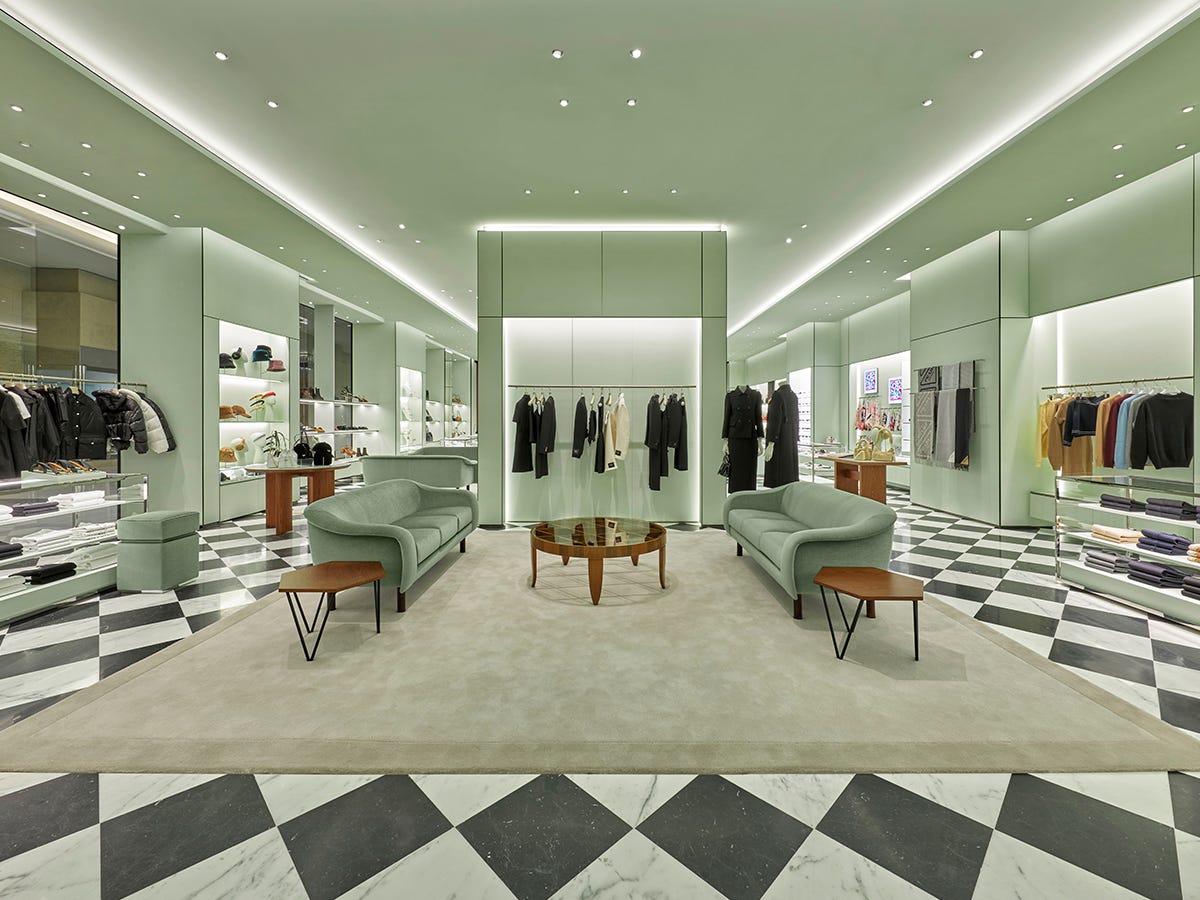
A hip running shop copies that look without the business underneath it. It buys someone else’s shoes at wholesale and keeps a much smaller slice. There’s no parent company covering the rent on a mostly empty store floor and no global ad budget. Yes, there are people who will drop $300 on an Adidas one-off or the new Satisfy capsule, but enough to carry a whole store in a localized market? Enough to send foot traffic through day after day and make sales? Enough people who will buy in-person instead of clicking on Satisfy’s (seemingly weekly) drop emails?
Rapha is another great example here. It popularized this gallery layout + coffee + community model for cycling, and unlike a 4th wave running shop, it actually owns the product for sale, much like Prada. But that Clubhouse model didn’t result in financial success—it closed five of its Clubhouses this year, and the CEO recently departed. The stores operating a running version of Rapha’s model and buying someone else's product at wholesale have an even harder road.
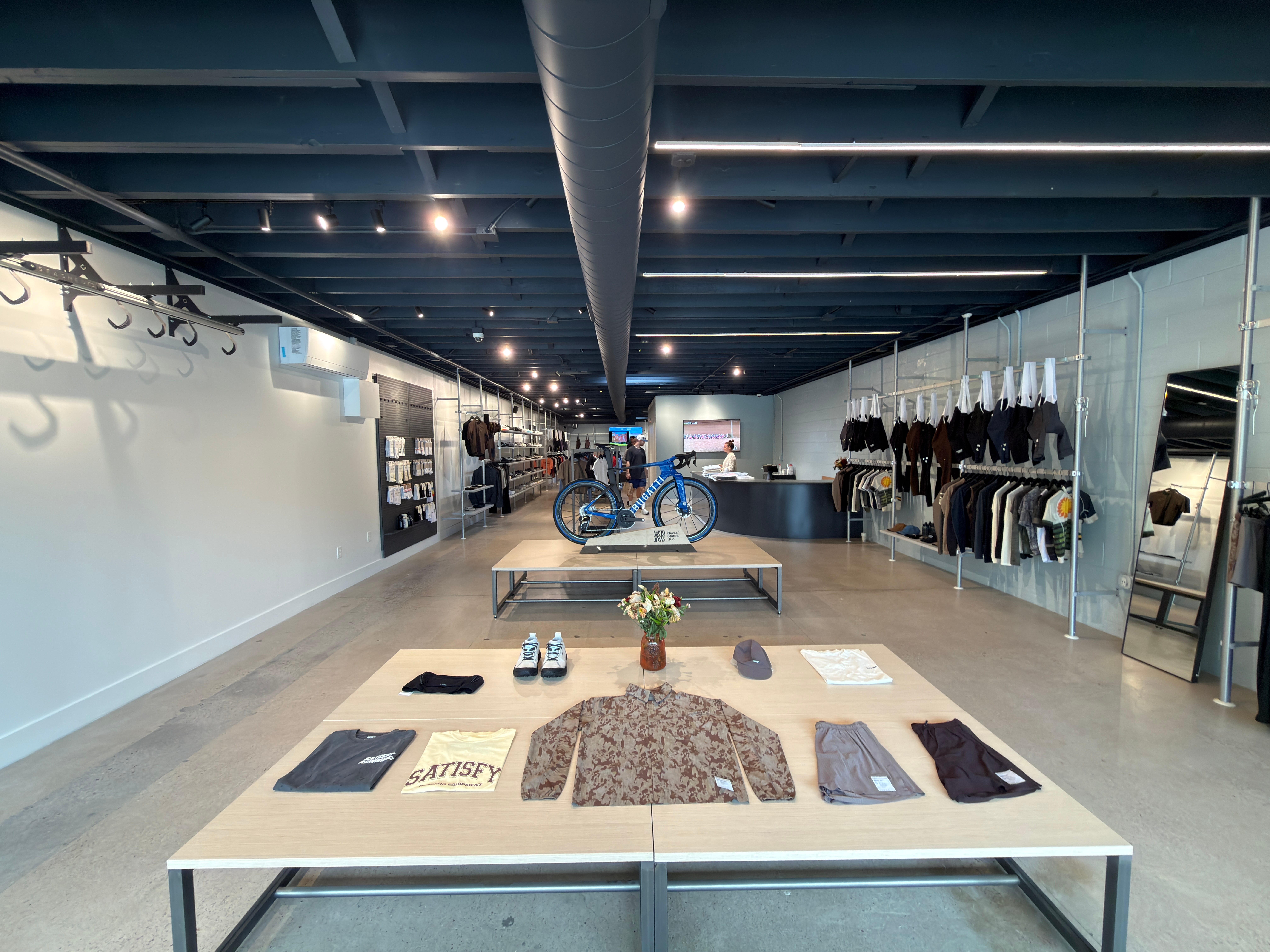
I stopped by the new enroute store on Pearl street in Boulder yesterday, a combination cycling/high-end running store. As expected, it’s stocked with Pas Normal, MAAP, Bandit, Satisfy, Raide, with a few Hokas, Asics, and Adidas shoes thrown in for variety.
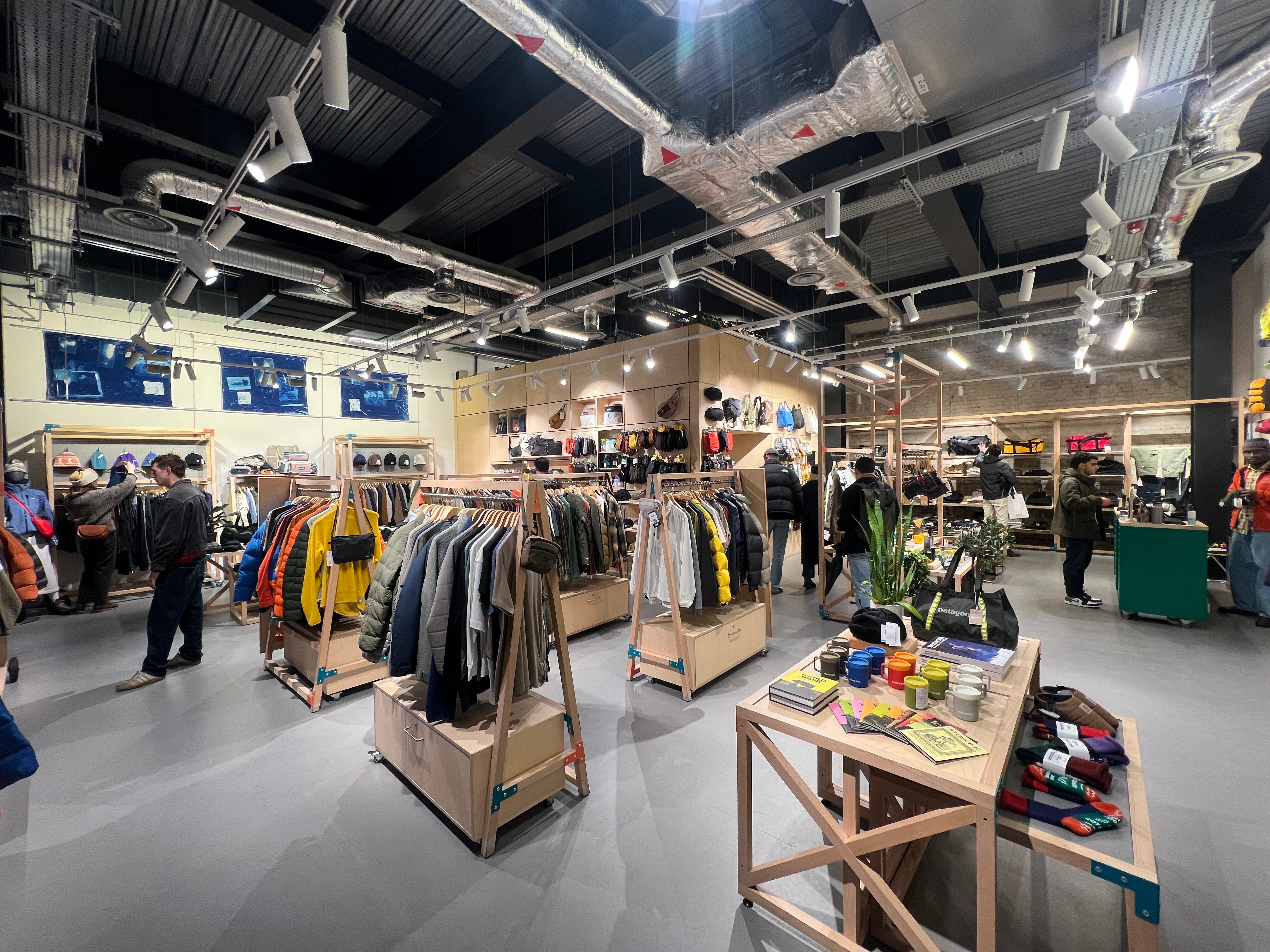
I’ve often wondered why Boulder doesn’t have a shop like this, but I always imagined it more in the vein of London’s Outsiders Store, which feels more broadly accessible in its aesthetic, carrying a mix of clothing and gear that caters more to both casual lifestyle shoppers and hard-to-find shoes/gear. There’s a warmth there that is lacking in the cold, luxury minimalism of many of these store designs. Yes, they carry Satisfy, but also Gramicci, Patagonia, Finesterre, Montbell, and Arc’teryx. They sell cups and hats and puffys and sleeping bags and Pa’lante backpacks. They also have the advantage of bridging that outdoor/lifestyle divide in a city of 9 million people, but they’re also putting that floor space to work, not leaving half of it empty.
I wish enroute the best. I’m sure the cycling community will appreciate the space after the loss of Rapha that used to be in this space, and it’s great to be able to see pieces from companies like Raide in person. If anything, Boulder might have enough middle-aged men with the disposable income to support an expensive, hip, gear habit that helps them feel younger than they are. But Boulder is an odd market. I’m not sure there are enough people who properly care about this high-end slice of the world to make a niche retail store sustainable, especially with the astronomical rents on Pearl Street and what I’d expect to be limited foot traffic most of the week.
Volume comes from regular people buying their next pair of Ghosts, and a pair of those on the wall would probably ruin the whole vibe.
Part of the industry, not the industry
Hip running brands push design forward, the 4th wave shops that carry them can play an important role in local communities, and they’ve also helped attract a lot of younger runners who might never have walked into a Fleet Feet. These spaces can work, it’s just really hard. I personally like following these trends, hearing about new brands, and seeing what folks are launching, even if 95% of it isn’t for me. I think it’ll remain a key goal for bigger incumbents (and retailers) to figure out how to make product and engage with the audiences these newer brands are catering to. Those brands are growing and there is a market there (yes, even for Satisfy’s drops).
But they are a part of the industry, not the industry. The bulk of the sport still runs on people buying the same “boring” support trainers they bought last time. Fleet Feet, REI, and Dick’s (where Arc’teryx is launching this fall) are probably better positioned to serve more of these audiences than a store that only caters to one slice of them. The stores that are built around the people who care about the drop of the week and ignore the average runner are the ones that are most likely to end up on Cole’s list.
I haven’t been to en route yet. I don’t feel like I need to. I saw the list of brands on the window and I’ve seen that movie before. I’ll be really surprised if it survives Boulder and the Pearl St spot with that inventory. The bet must be that the fashion consumer makes up for losing the nurses who simply need comfy shoes. I wouldn’t put my money on that for the short term let alone the long term. Great write up Kyle.